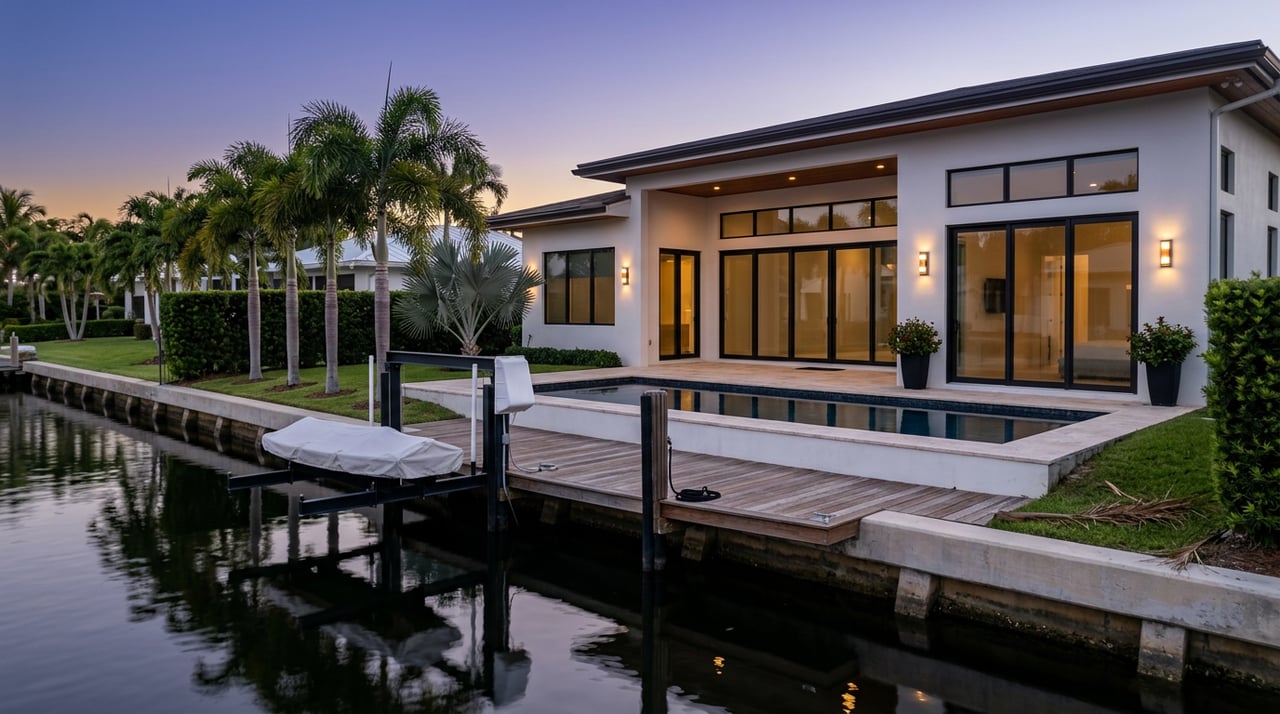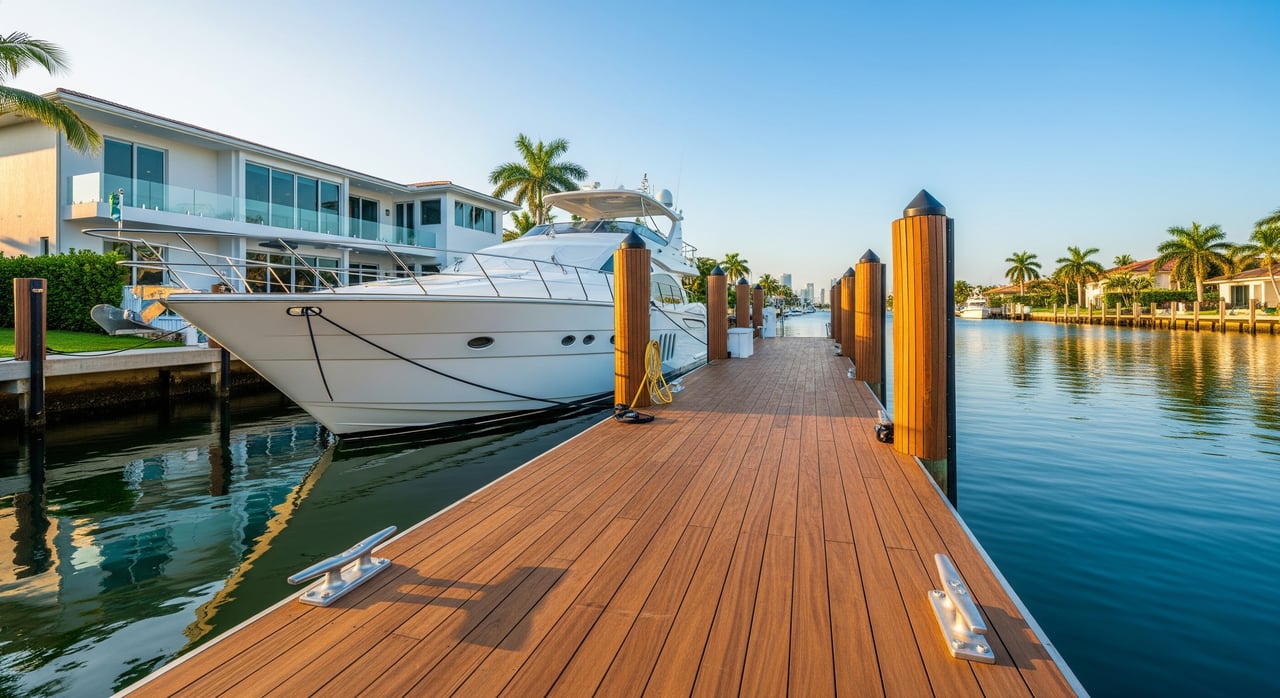
If you spend any time searching Las Olas waterfront listings, you see “deepwater dockage” everywhere. It sounds perfect if you plan to keep a larger boat or yacht at home. But what does it actually mean for your vessel, your insurance, and your property value? In this guide, you learn how to translate that marketing phrase into facts you can verify, so you can buy or sell with confidence. Let’s dive in.
What “deepwater” really means
“Deepwater” is a descriptive term, not a legal standard. One broker may mean “good for larger yachts,” while another simply means “no fixed bridges.” You need specifics.
- Depth must be tied to a tidal datum, most commonly Mean Lower Low Water (MLLW). If a listing lists depth without a datum, it is ambiguous.
- The controlling number for navigation is usually depth at the lowest predictable tide. That is what determines draft limits.
- Vertical clearance matters as much as depth. Any fixed or movable bridge on your route can limit air draft and timing.
- Channel width and turning space affect whether you can safely maneuver at your dock or in the canal.
- The route to the ocean, including time, bridges, and speed zones, affects how practical the dock is for your use.
Las Olas Isles: key local factors
Las Olas Isles sits on a web of canals that feed into the Intracoastal Waterway and out to the Atlantic. The appeal is real: short transits, waterfront living, and proximity to marinas and service pros. Still, the capability of a given dock depends on location-specific details.
- Canal conditions vary by island and canal. Historic dredging and natural shoaling can change usable depth over time.
- Canal widths, dock spacing, and nearby seawalls limit turning room. A long yacht may require careful maneuvers or use the ICW for turning.
- Movable bridges and any fixed structures along your route can restrict height or add timing considerations. Always check clearances and opening schedules.
- Local marine service is strong. Surveyors, contractors, and marinas around Fort Lauderdale are familiar with Las Olas canals and common vessel sizes.
How to verify deepwater dockage
Treat “deepwater” like a checklist. Ask for documentation, and bring in qualified experts when records are incomplete.
Measurements to request
- Depth profile at the dock face and along the likely route, referenced to MLLW. If no records exist, hire a licensed marine surveyor or diver to take soundings.
- Tide behavior for the nearest NOAA station. Confirm the lowest predictable tide and how it affects usable depth.
- Bottom composition notes, if available. Soft sediment and shoaling can reduce effective draft even when a depth number looks adequate.
Route and bridges
- Identify every bridge from your dock to the ocean. Note fixed clearances and the operation schedules for movable spans.
- Confirm speed and wake zones along the route. These affect transit time and comfort.
- Estimate run time to the ICW and inlet under typical conditions.
Maneuvering room
- Measure canal width and the distance to opposing docks or seawalls. Compare to your vessel’s length and beam to assess turning radius.
- Consider wind, current, and traffic patterns in your specific canal, not just on the ICW.
Structural and legal records
- Dock permits and modification history. Verify original construction and any upgrades were permitted.
- Seawall condition and repair history. Obtain recent inspection reports and clarify who is responsible for future maintenance.
- Boat lift specs and permits. Confirm capacity, operating condition, and compliance with permitted plans.
- Environmental compliance, including any seagrass surveys, mitigation plans, or seasonal work windows tied to past approvals.
- Easements, HOA rules, or shared seawall agreements that could affect use or costs.
- FEMA flood zone and an Elevation Certificate, if available. These may affect insurance and lender requirements.
For buyers: match the dock to your vessel
Buying on Las Olas Isles is often about the boat as much as the house. Before you fall in love with the view, make sure the dock works for how you really boat.
- Define your vessel’s draft, beam, length overall, and air draft. If you plan to upsize, set targets now.
- Compare those numbers to measured depth at MLLW, canal width, and bridge clearances. Ask for measured data, not estimates.
- Walk the route with your surveyor. Confirm any tight turns, shoaling spots, or tricky currents.
- Factor fueling and service access into your decision. Proximity to marinas and yards can save time.
- Plan for insurance. Lenders often require flood insurance, and insurers may ask for seawall condition and dock details before binding coverage.
Pro tip: If you are purchasing the home with a specific yacht in mind, include a dock and route contingency that allows for a marine survey of depths and clearances.
For sellers: present “deepwater” with proof
If your dock is a true asset, package it that way. Buyers of larger vessels are selective and data driven.
Commission a current depth survey referenced to MLLW, with measurements at the dock and along the exit route.
Gather permits for the dock, lift, and any seawall work, plus inspection reports and maintenance records.
Document the route to the ICW and the inlet, including bridge clearances and typical opening schedules.
If your canal has ample turning room, provide a simple diagram with measurements. If not, show how a vessel can turn in the ICW.
Disclose HOA or shared seawall details early to avoid surprises.
Well-documented waterfront features make marketing cleaner, ease buyer due diligence, and support value during negotiations.
Costs and ongoing maintenance
Owning a waterfront dock involves predictable costs. Plan ahead and avoid deferred maintenance that can slow a sale or kill a deal.
- Dock and piling maintenance: periodic inspections, fastener checks, decking repairs, fendering, and lighting.
- Boat lift service: annual or semiannual checks of motors, cables, and controls; capacity verification against your vessel.
- Seawall upkeep: cap condition, tie-back tension, and elevation. Repairs can be material for insurance.
- Dredging contingencies: if you anticipate depth issues, expect a multi-agency permit process and disposal logistics.
- Insurance: flood coverage based on FEMA flood zones; windstorm or hurricane riders for dock structures and lifts may be separate.
Permitting basics you should know
Waterfront work usually triggers multiple reviews. Before you plan additions or major repairs, understand the likely path.
- Local permits: City of Fort Lauderdale and Broward County handle building, dock, bulkhead, lift, and some dredging approvals.
- State review: Florida Department of Environmental Protection may be involved for activities that affect state waters, submerged lands, seagrass, or mangroves.
- Federal permits: The U.S. Army Corps of Engineers can be required for dredge-and-fill or work in navigable waters.
- Environmental protections: Manatee protection rules and seagrass resources can drive timing, method, or mitigation.
- Navigation safety: U.S. Coast Guard and local authorities manage bridge operations and navigational advisories.
The key takeaway is to verify whether past work was permitted, whether mitigation is ongoing, and what will be required for future changes.
How depth and access impact value
For many Las Olas buyers, quick ocean access and sufficient depth for a larger boat are not luxuries. They are must-haves. Verified deepwater access can expand your buyer pool and support pricing for homes that cater to yacht owners.
Value depends on demonstrated capability. The combination of documented depth at MLLW, a practical route free of fixed-height limits for your vessel class, sound dock and seawall condition, and clean permits is what sells. Without those, a “deepwater” claim is just a headline.
Professionals to put on your team
Given the stakes, assemble the right specialists early, ideally before listing or during your inspection window as a buyer.
- Licensed marine surveyor: measures depths, evaluates dock structures, and validates vessel compatibility.
- Dock contractor or engineer: assesses structural integrity, estimates repairs, and advises on permits.
- Local permitting offices: City of Fort Lauderdale and Broward County for records and requirements.
- State and federal contacts: Florida DEP and U.S. Army Corps of Engineers for permit histories when needed.
- Insurance and lending advisors: align coverage, flood requirements, and underwriting criteria.
Your next steps on Las Olas Isles
If you are evaluating a property that claims deepwater dockage, ask for the measurements and records listed above. If you are preparing to sell, invest in a simple depth survey and a clean permit package. In both cases, you reduce risk, strengthen your negotiating position, and save time.
If you want a confidential, high-touch approach to buying or selling on Las Olas Isles, let’s talk about your goals, vessel requirements, and timing. Schedule a private consultation with Unknown Company.
FAQs
How is “deepwater dockage” defined on Las Olas Isles?
- There is no single numeric standard. Ask for measured depths at the dock and along the route referenced to MLLW, plus bridge clearances and turning room.
Can any boat use a Las Olas “deepwater” dock?
- Not always. Usable draft depends on depth at low tide, your boat’s draft, overhead clearance under bridges, and maneuvering space in the canal.
Who handles seawall and dock repairs for a waterfront home?
- Usually the property owner, but shared seawalls or HOA covenants can change responsibility. Verify in permits, title records, and association documents.
Will adding or enlarging a dock be straightforward in Fort Lauderdale?
- Expect multiple permits and possible environmental review. Timing, mitigation, and costs vary by scope, location, and presence of protected resources.
Does verified deepwater access increase a home’s resale value?
- For buyers who need larger vessels and easy ocean transit, documented depth and access generally support value, provided condition and permits back it up.