Selling a waterfront home in The Landings is different from selling anywhere else in Fort Lauderdale. Buyers here care as much about draft, bridge clearance, and seawall height as they do about kitchens and closets. If you plan well, you can answer those questions upfront, inspire confidence, and protect your price. In this guide, you’ll get a clear, step‑by‑step plan to prepare, price, and market your Landings home so you attract serious boat‑owner buyers fast. Let’s dive in.
Why The Landings sells strong
The Landings is a canal‑front neighborhood in northeast Fort Lauderdale where most homes sit on navigable water. Many properties offer quick access to the Intracoastal and ocean, which is a prime draw for boaters. A key pricing detail is the east versus west side of Bayview Drive. East of Bayview, many homes are known for ocean access with no fixed bridges. That feature expands the buyer pool for larger yachts and often commands a premium.
Buyers also evaluate usable dockage, turning basin width, and the condition of your seawall and lift. Your job is to present those assets clearly and remove doubt before showings begin.
Step 1: Assemble your waterfront file
Start by gathering the documents buyers and their lenders will ask for. Having these at launch shortens time to contract and protects your leverage.
- Survey showing waterline and dock improvements
- Permits and invoices for seawall, dock, and lift work
- Boat‑lift capacity specs and service records
- Elevation Certificate or notes on where to obtain one
- Insurance information and any recent renewal quotes
If you do not have an Elevation Certificate, plan to order one. Lenders often require flood coverage for properties in Special Flood Hazard Areas, and an Elevation Certificate supports accurate rating. Learn how these documents are used through FEMA’s mapping resources and certificate guidance on the FEMA MSC portal.
Step 2: Inspect seawall, dock, and shore power
Waterfront buyers want to see that the structure protecting your property is sound and compliant. Broward County and the City of Fort Lauderdale have minimum seawall elevation and tidal‑barrier standards, along with a seller disclosure requirement for tidally influenced properties. Review the regional standards and local implementation details at Broward County’s resilience page.
- Order a licensed marine contractor inspection of the seawall. Ask for a written report with photos, recommended repairs, and the top‑of‑wall elevation noted in NAVD88.
- Confirm whether past seawall or dock work was permitted and closed. Many projects require city building review plus county and state aquatic licensing. Broward outlines multi‑agency requirements in its permitting overview.
- Service the boat lift and keep a record of the maintenance visit. Include the manufacturer, capacity, and service history in your listing packet.
- Hire a marine electrician to test bonding and grounding, verify GFCI or ELCI protection, and check any shore‑power pedestals. Electrical safety at the dock is a common buyer and insurer concern. See what a proper check covers in this dock electrical safety overview.
If significant seawall or dock repairs are needed, disclose them early and secure written estimates. You can often keep momentum by pricing accordingly rather than trying to fast‑track complex permits before listing. For a sense of the permitting path and timelines, review this Fort Lauderdale seawall permitting guide.
Step 3: Clarify flood zone and insurance
Insurance affects carrying costs and buyer confidence. Confirm your FEMA flood zone and Base Flood Elevation using the FEMA MSC tools. If your Elevation Certificate is outdated or missing, order a new one.
Consider ordering a wind‑mitigation inspection or a 4‑point report if insurance history has been a hurdle. These reports can help buyers and insurers quantify credits for features like impact windows or roof attachments. For context on how insurers evaluate South Florida homes, review this overview of Florida homeowners insurance factors.
If you work with a private insurer or broker, ask for a sample renewal or a quote for comparable coverage. Providing this at launch helps out‑of‑area buyers move faster.
Step 4: Verify canal depth and dredging responsibility
Depth drives boat usability. Confirm the fairway depth at low tide for your canal and note any shoaling. Start with NOAA responders charts for regional orientation, then add local marina input or recent dredging notes. You can explore regional chart data through the NOAA Responders Charts.
There is no single rule for who pays to dredge. Responsibility may sit with individual owners, a neighborhood association, or a special district. If you know of recent dredging or an assessment, document the date, scope, and payer in your listing materials.
Step 5: Price for access, dockage, and condition
Set your price using ocean‑access comps with similar bridge constraints and usable dockage. In The Landings, these features often command premiums:
- No fixed bridges and direct ocean access, especially east of Bayview
- Usable dock length and fairway width for larger vessels
- Seawall condition and whether it meets current tidal‑barrier standards
- Point or corner lots and proximity to amenities
Avoid over‑weighting interior cosmetics while ignoring marine infrastructure. Appraisers, inspectors, and lenders frequently adjust for seawall condition, dock permits, and safety items. Document repairs and permits to protect value.
Step 6: Market like a boater
Media that showcases access
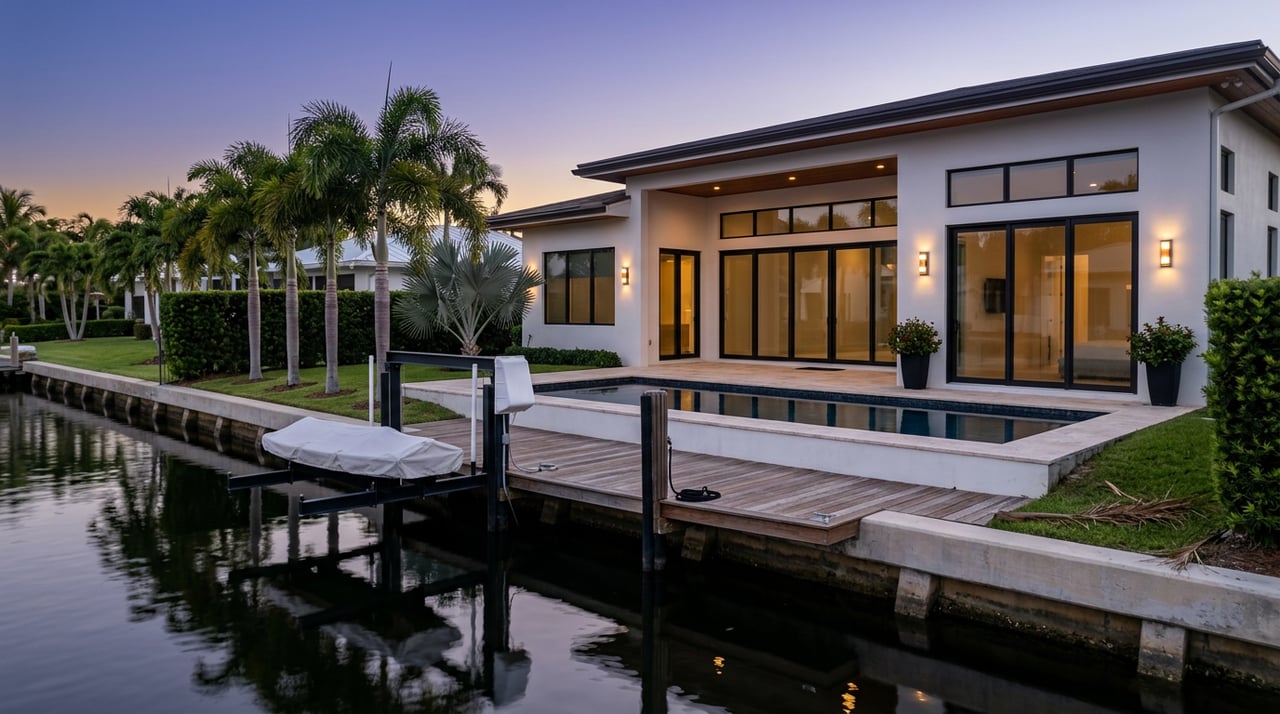
Lead with media that proves your water story. Use drone photography to show canal layout, turning basin width, and quick routes to the Intracoastal. Add twilight imagery to spotlight outdoor lighting and dock ambience. If safe and permitted, produce a short “boat‑in/boat‑out” video to show approach, depth, and turning radius. Regional charts help orient out‑of‑area buyers, so consider a graphic callout aligned to NOAA chart references.
Stage the outdoor experience
Declutter the dock and polish outdoor rooms so buyers can visualize the lifestyle. NAR’s latest staging data suggests that thoughtful presentation helps buyers see themselves in the home and can improve offers. See highlights in the NAR Profile of Home Staging.
Target the right audience
In your first two weeks, pair MLS exposure with targeted outreach to boat‑owner networks. Host a broker preview where a marine contractor or electrician can answer technical dock questions. Launch with full media and a downloadable documentation packet so agents can pre‑qualify buyers effectively.
Step 7: Attach a complete documentation packet
Reduce friction by making a clean packet available in the MLS attachments and at showings. At minimum include:
- Survey with waterline and dock improvements
- Elevation Certificate and FEMA panel reference from the FEMA MSC
- Seawall inspection report with photos and top‑of‑wall elevation
- Dock and lift permits, warranties, and service records
- Marine electrical safety check
- Insurance renewal or sample quote and any wind‑mit or 4‑point reports
- The required Broward seller disclosure for tidally influenced properties, aligned with county resilience guidance
During contract and closing: avoid common stalls
Expect buyers to order their own marine and electrical inspections. Having your reports ready usually narrows negotiations to clear, documented items. If a repair is requested, decide whether to credit at closing or complete the work with a contractor who can meet realistic timelines. Remember that significant marine work often requires permits, which can affect closing dates as outlined in the county’s permitting overview.
If the buyer’s renovation scope approaches the substantial improvement threshold, building code and flood‑elevation requirements may increase. Learn how local jurisdictions evaluate this using a sample substantial improvement form. For valuation nuance on unique marine features, appraisers may lean on specialized data and market context similar to what leading analysts publish in quarterly briefs. Lenders may also ask how any material seawall or dock repairs will be handled.
If there are open code cases or seawall compliance orders, disclose them and share your plan to resolve them. Many enforcement notices include start and completion timelines. An example of enforcement language is shown in this local seawall enforcement document.
Timeline: your 4‑phase roadmap
Follow this simple schedule to stay ahead of buyer questions.
8 to 12 weeks before listing
- Gather survey, permits, invoices, warranties, Elevation Certificate, and insurance history.
- Order a seawall inspection and written marine‑electric report. Secure lift service and any needed bids. Review permit pathways for larger work using this seawall permitting guide.
- Confirm flood zone, BFE, and certificate needs on the FEMA MSC portal. Consider wind‑mit and 4‑point reports to document credits.
3 to 6 weeks before listing
- Complete high‑impact repairs such as dock decking, cap repair, lighting, and any flagged electrical fixes.
- Finalize your documentation packet and schedule drone, twilight, interior, and water‑route video.
Launch week
- Go live with full media and the downloadable packet. Emphasize usable dock length, lift capacity, fairway width, and bridge constraints in your copy.
- Host a broker preview and activate outreach to boater networks. Track and address the top two to three questions quickly.
During inspections
- Share your reports immediately. If buyer inspections add requests, weigh a credit versus completing work before closing. Keep contractor timelines and permit realities in view using the county’s permitting overview.
Ready to sell with confidence
When you lead with documentation, prove your water story, and market like a boater, you turn due diligence into a selling point. That is how you protect value and move from listing to closing with fewer surprises. If you are considering a sale in The Landings, let’s build a tailored plan for your property and your timeline. Schedule a private consultation with Heather Lefka.
FAQs
What makes a Landings home more valuable to boaters?
- Homes with no fixed bridges to the ocean, strong seawall condition, wide fairways, and long usable dockage often command premiums because they accommodate larger vessels and easier navigation.
How do I know if my seawall meets Broward standards?
- Order a marine inspection to measure top‑of‑wall elevation in NAVD88 and compare it with county and city guidance. Review Broward’s tidal‑barrier and disclosure info on the county resilience page.
Do I need an Elevation Certificate to sell my Landings home?
- You can sell without one, but lenders often require flood insurance for homes in Special Flood Hazard Areas, and an Elevation Certificate supports accurate rating. Learn more at the FEMA MSC portal.
Who is responsible for dredging the canal behind my home?
- Responsibility varies by area and recorded documents. Check your title, any association covenants, and local records. For depth context and navigation, review NOAA Responders Charts and consult local marinas.
What documents should I give buyers about my dock and lift?
- Provide dock and lift permits, capacity specs, warranties, and service logs, plus a marine‑electric safety report. Include your seawall inspection with photos and any repair invoices to build buyer confidence.