If you measure home by slip length, seawall strength, and time to open water, Harbor Beach has likely caught your eye. You want a property that makes every departure smooth and every return effortless, with a private beach scene that fits your lifestyle. In this guide, you’ll learn how Harbor Beach works for yacht owners, what to verify at each property, and how to budget and plan for day-to-day boating and storm season. Let’s dive in.
Harbor Beach at a glance
Harbor Beach sits along Fort Lauderdale’s coastal corridor and is known for luxury single-family homes, many with private docks and a private beachfront culture. Most waterfront properties connect to the Intracoastal Waterway, with a relatively short run to the Atlantic via nearby inlets. Exact routing and travel time vary by property, so you should verify the path from the dock to open water. Expect association rules tied to private beach and common areas, along with elevated neighborhood services.
Water access and canals
From Harbor Beach docks, you typically enter the Intracoastal Waterway, then continue toward Port Everglades and the ocean. Canal depth and width vary across the neighborhood, so suitability depends on your yacht’s draft and beam. Some canals are deep-water and fit larger vessels, while others favor smaller powerboats. Ask for a recent depth survey at mean low water and confirm any dredging history or plans.
Depth and dredging checks
- Request a current bathymetric or depth survey for the canal and berth.
- Ask who is responsible for dredging and seawall upkeep: owner, association, or municipality.
- Confirm whether dredging is permitted and if there are environmental timing limits.
Docks and equipment you’ll see
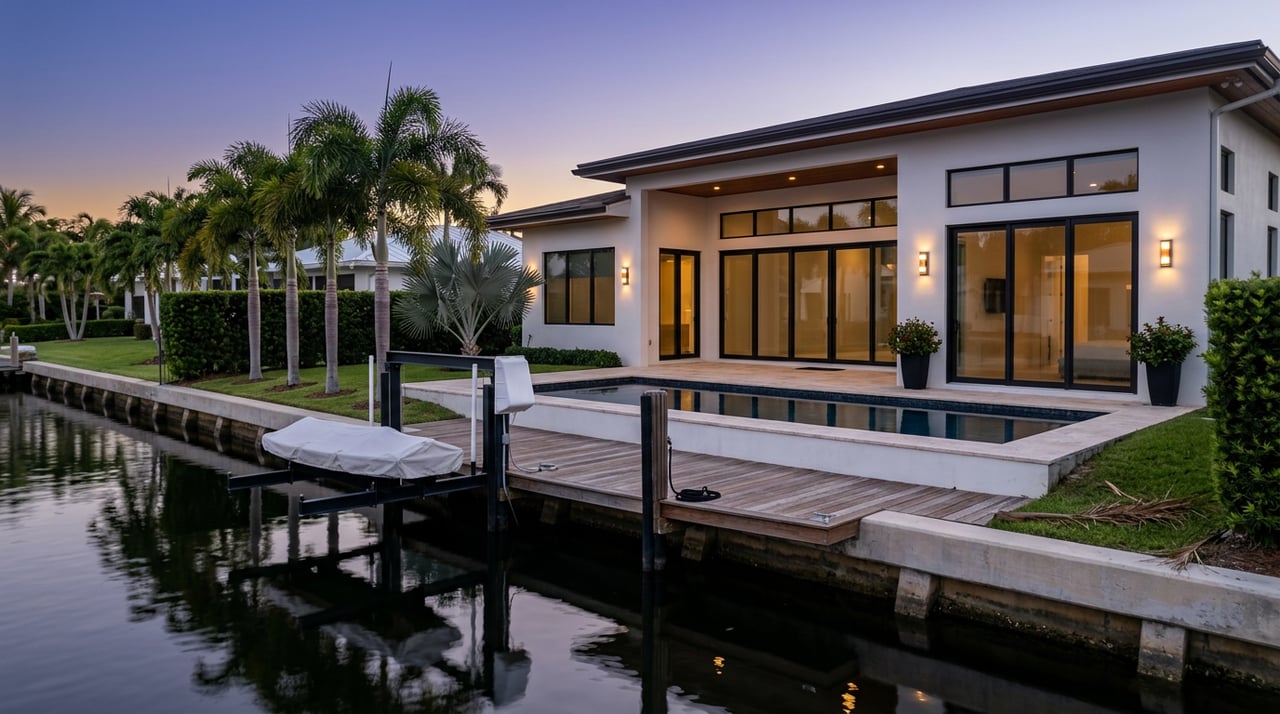
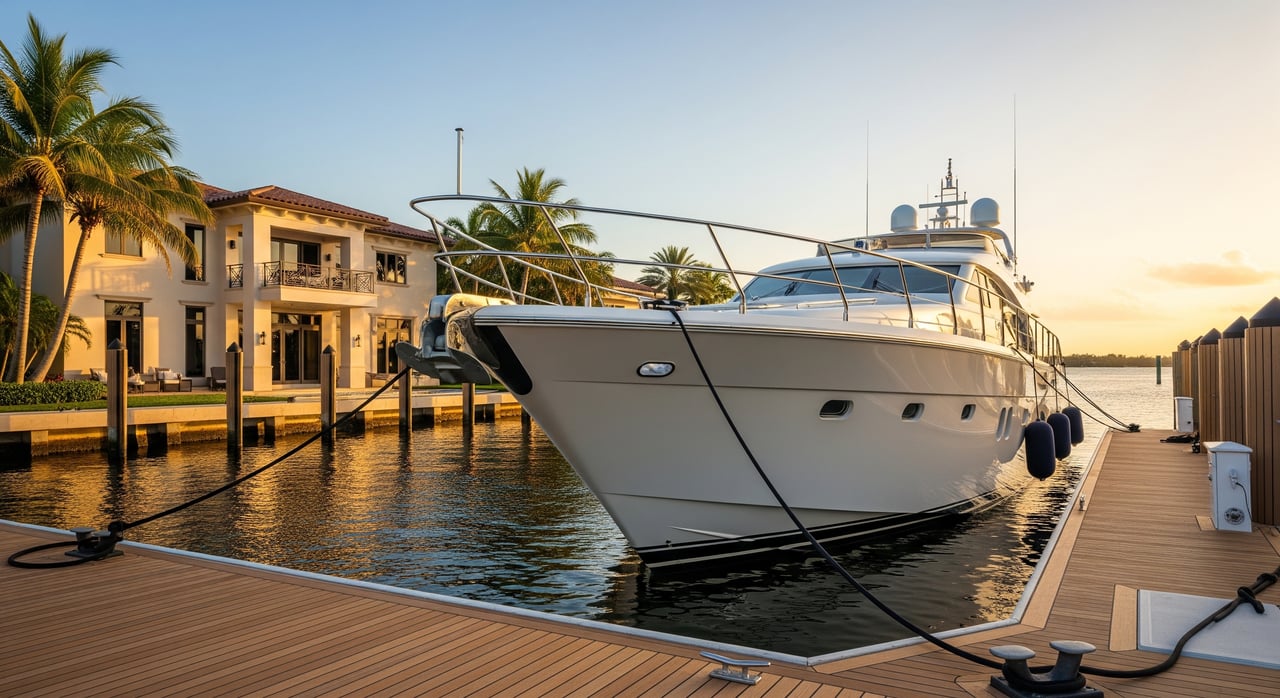
Many estates feature private fixed docks with pilings, sometimes paired with finger piers to maximize usable length. Floating docks appear in certain spots and can help with tidal shifts and wave action. Lifts, davits, and covered slips are present on some properties but not all. Utilities vary, so confirm shore power specs, water, and any data connections at the dock.
Shore power and lift essentials
- Verify voltage and amperage, metering, and any upgrade history.
- Check lift capacity and recent service records if a lift is installed.
- Inspect pilings, decking, and hardware to gauge near-term capital needs.
Maneuvering and clearance checks
Narrow side canals and tight turning basins can make close-quarters handling more complex for long yachts. Measure usable slip length and beam, and consider the proximity of neighboring pilings and docks. Confirm any local no-wake zones that affect timing and approach. If your route includes fixed bridges, verify air draft and clearance at high water.
Daily yacht operations
Harbor Beach owners often board, provision, and overnight on their yachts at home docks. For fueling, haul-outs, major service, and seasonal work, you will use nearby professional marinas and boatyards in the Fort Lauderdale and Port Everglades corridor. Plan for guest parking, crew access, and vendor logistics within association rules. Make sure trash, recycling, and pump-out routines align with neighborhood requirements.
Private beach-club lifestyle
A hallmark of the area is a private beachfront experience tied to the neighborhood. Residents enjoy beach days, pool time, and social gatherings that pair well with boating. Membership terms, guest policies, and vendor access typically sit within association or club bylaws. Request all documents early so you understand transfer fees, access rules, and event guidelines.
Support services nearby
Fort Lauderdale is a global yachting hub. You will find boatyards, engine specialists, electronics shops, riggers, paint and fiberglass experts, chandlers, and seasonal haul-out options across the Port Everglades corridor. During peak season, many services book out well in advance. Identify preferred providers and typical lead times as part of your planning.
Costs to expect
Owning in Harbor Beach often includes association fees and beach-club dues that reflect private amenities and security. Waterfront maintenance can be significant, including seawalls, pilings, docks, and lifts. Factor in marine insurance for the vessel, higher property and flood insurance for waterfront homes, and routine crew or vendor expenses. If a canal needs maintenance, confirm any potential dredging assessments.
Hurricane-season planning
Most yacht owners adopt a clear hurricane plan before the season. Common steps include pre-season inspections, service contracts with haul-out yards, and reserved slots at protected marinas. Some owners move vessels to safer harbors when a storm approaches. Review your association’s emergency protocols and any restrictions on pre-storm vessel movements.
Due-diligence checklist for buyers
Use this list to confirm property fit and reduce surprises at closing.
Documents to request
- Current dock and canal depth survey at mean low water.
- Seawall condition report with repair history.
- HOA or association covenants, beach-club bylaws, dues, and any transfer fees.
- Dock, seawall, and dredging permits, plus records showing maintenance responsibility.
- FEMA flood zone information and the property’s elevation certificate.
- Title review for maritime encumbrances or easements affecting dock use.
On-site verifications
- Measure usable slip length and beam; check clearances to pilings and neighbors.
- Confirm canal width, turning radius, and nearby no-wake zones.
- Check shore power specs, water, and any data lines at the dock.
- Inspect pilings, decking, lifts, and any covered slip structures.
- Ask about dredging schedules and sediment conditions in the canal.
Regulatory and environmental context
- Understand which agencies oversee docks, seawalls, and dredging for the property.
- Follow local rules on speed, no-wake zones, and mooring along the ICW.
- Comply with environmental protections, including seagrass and turbidity limits.
- Review waste and discharge rules, including pump-out requirements.
Operations and safety planning
- Line up preferred service yards, fuel docks, and chandlers; confirm seasonal lead times.
- Establish crew access and vendor protocols per association rules.
- Build a hurricane plan with haul-out or relocation options.
- Confirm insurance requirements for both home and vessel.
Is Harbor Beach a fit?
If your ideal day starts with a smooth line cast from your private dock and ends with a sunset on a quiet stretch of sand, Harbor Beach aligns with that vision. The final answer rests on your yacht’s dimensions, the specific canal’s depth and width, and the property’s dock configuration and utilities. With thorough due diligence, you can match the right home to your vessel and your routine. When you are ready to explore options, schedule a private consult with a local expert.
If you want a discreet, curated search focused on yacht-ready properties and private-beach living, connect with Heather Lefka for tailored guidance and white-glove coordination from first tour to close.
FAQs
What makes Harbor Beach appealing to yacht owners?
- Many properties offer private docks with quick access to the Intracoastal Waterway, plus a private beachfront culture that complements day-to-day boating.
How do I confirm a Harbor Beach canal is deep enough for my yacht?
- Ask for a recent written depth survey at mean low water and request dredging history or scheduled maintenance for that canal.
What should I look for in a Harbor Beach dock setup?
- Verify usable slip length and beam, piling condition, shore power specs, and whether a lift or covered slip fits your vessel and routine.
Are there special rules for the private beach and community amenities?
- Review the association or club bylaws for membership terms, guest access, vendor rules, parking, and event guidelines before you commit.
Where will I handle fueling, haul-outs, and major service?
- Routine provisioning happens at your private dock, while fueling, haul-outs, and major work are handled by nearby professional marinas and boatyards in the Fort Lauderdale area.
How should I plan for hurricanes with a yacht in Harbor Beach?
- Set a pre-season plan that may include yard contracts, reserved marina space, and clear relocation steps; align your approach with neighborhood emergency protocols.