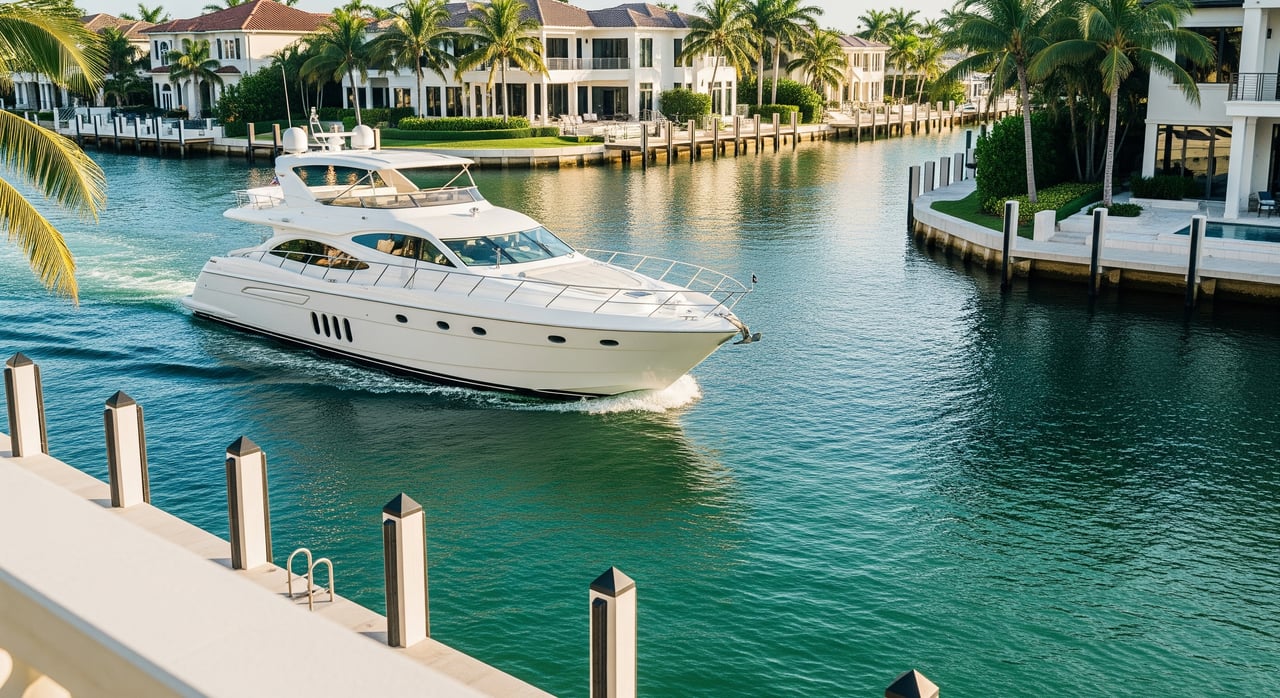
Is your yacht truly a match for Bay Colony’s private canals? If you are buying or selling in this gated Fort Lauderdale enclave, it pays to verify more than just “deep water” claims. You want smooth access to the Intracoastal Waterway, safe maneuvering near your dock, and peace of mind on closing day.
In this guide, you will learn exactly how to confirm canal depths, widths, and turning room using authoritative sources and on-water checks. You will also see common pitfalls and a practical checklist you can use right away. Let’s dive in.
Bay Colony waterways: what matters
Bay Colony sits within Fort Lauderdale’s network of private canals that connect to the Intracoastal Waterway and the Atlantic. Whether your yacht will fit comes down to vessel dimensions, canal geometry, and local conditions.
Key vessel dimensions
- Length overall (LOA): Drives berth length and turning needs in tight canals.
- Beam: Determines side-to-side clearance at docks and between pilings.
- Draft: Governs whether the canal depth is sufficient at low tide.
- Air draft: Matters if any fixed bridges or lines sit along your route.
- Maneuvering setup: Twin screws, bow thrusters, and rudder design affect low-speed control.
Canal and environmental factors
- Charted vs. actual depth: Surveys show a snapshot, but shoaling can reduce depth over time.
- Tides and timing: Broward is micro-tidal, yet low tide still reduces your clearance.
- Current and wind: Cross-breezes and narrow fairways increase room needed to turn.
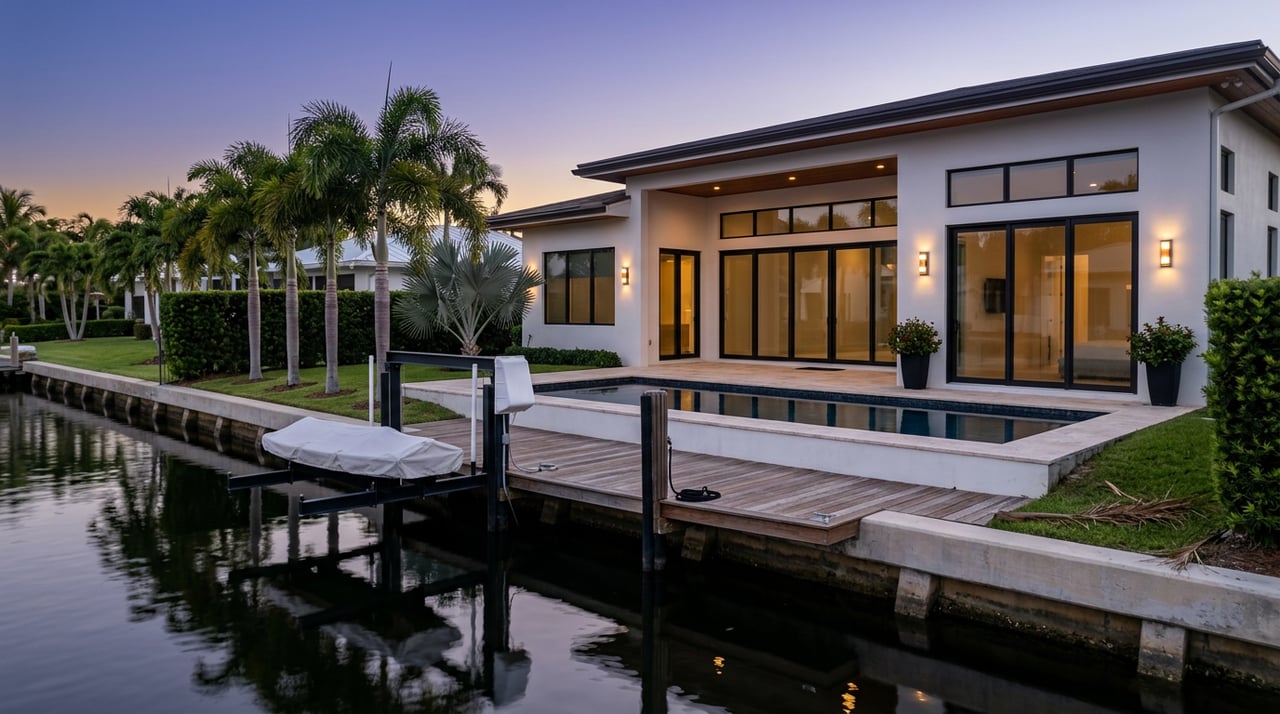
- Seawalls and docks: Pilings, finger piers, and neighbors’ boats limit swing radius.
- Regulations: Permitted dredge depths, seagrass protection, and HOA rules affect what can be changed.
Why charts and reality differ
Even well-maintained canals can develop shallow spots at corners or canal mouths. The safest approach is to pair paper or digital research with on-water confirmation using a depth sounder and, for larger yachts, a trial run with a local captain.
How to verify Bay Colony canal depths and turns
Follow this workflow before you commit to a property or a vessel change.
1) Gather exact yacht specs
Collect LOA, beam, maximum draft, and air draft from your builder docs or a marine surveyor. Estimate nothing.
2) Check authoritative charts and surveys
- Review charted depths and aids to navigation using the NOAA Office of Coast Survey charts. Confirm you are viewing the latest edition and updates.
- Look for recent surveys in federal channels or nearby projects from the USACE Jacksonville District. These reports can hint at regional shoaling and dredging timelines.
- Ask Broward County if local bathymetric data or canal maintenance records exist through Broward County Environmental Planning.
3) Confirm HOA and property records
Request Bay Colony HOA dock specifications and any canal design documents. Ask for:
- Allowed vessel length and beam limits
- Permitted drafts and any live-aboard rules
- Canal design depth, width, and any recent dredging or maintenance history
4) Do on-water verification
Arrange depth-sounder runs at both low and high tides from the berth to the ICW. Use recent aerial imagery to pre-check turning basins and dock spacing, then confirm in person. For larger yachts, schedule a practical test with a licensed local captain.
5) Check vertical clearance along the route
Identify any fixed bridges, power lines, or overhanging trees between your dock and open water. Verify your vessel’s air draft against published clearances and confirm real-world conditions with a captain when in doubt.
6) Understand permitting constraints
If deepening a slip or adjusting a turning area is on the table, expect permits and coordination. Start with the U.S. Army Corps of Engineers Jacksonville District and the Florida Department of Environmental Protection, and consult Broward County. Projects affecting seagrass or below certain depths can require mitigation, time, and cost. HOA approval is typically required where canals are shared.
7) Review boater safety and local practices
For safe operation and local rules in Florida waters, consult the Florida Fish and Wildlife Conservation Commission boating resources.
Size guidance for Bay Colony yachts
Use these conservative heuristics as a starting point. Always verify with surveys and a captain.
Small runabouts and dayboats
For LOA under roughly 30 feet and shallow draft, most private canals in Bay Colony are likely accessible. Still confirm berth width and check for tidal shallow spots, especially near canal corners.
Mid-size yachts
For LOA of about 30 to 50 feet, obtain detailed depth data and confirm turning room. Twin screws and bow thrusters make a meaningful difference in tighter spaces.
Large yachts and deep-draft vessels
For LOA above 50 feet or deeper draft, assume more due diligence. Confirm minimum depths at low tide, identify true turning basins, and verify any HOA limits on vessel size. Even if charts suggest adequate depth, practical maneuvering can be the limiting factor.
Build in safety margins
Allow a prudent depth clearance between max draft and the verified minimum water depth, and ensure lateral and swing room that matches your yacht’s handling profile. A local marine surveyor can advise on suitable margins for your vessel and route.
Common pitfalls to avoid
- Trusting “deep water” claims without recent survey evidence
- Assuming ICW access guarantees large-yacht access to every private canal
- Overlooking HOA rules on vessel length, beam, and overnight berthing
- Relying only on satellite images without on-water depth checks
- Skipping a trial run when your yacht’s size is near the canal’s practical limit
Action checklist for buyers and sellers
Use this list to move from research to clear answers.
Immediate documents
- Request HOA dock specs, canal design data, and dredging history
- Review the property plat and any canal maintenance agreements
Technical verification
- Confirm LOA, beam, max draft, and air draft from manufacturer records
- Review NOAA Office of Coast Survey charts for charted depths and hazards
- Check for surveys or dredging records via the USACE Jacksonville District and contact Broward County Environmental Planning
On-water checks
- Hire a licensed marine surveyor or captain to run depth soundings at low and high tides
- If feasible, conduct a test run with your yacht or a similar-size vessel
Permitting and long-term planning
- If dredging or dock changes are needed, consult the Florida Department of Environmental Protection and USACE for permit paths
- Confirm HOA approval requirements and potential cost-sharing for canal maintenance
Professionals to engage
- Local marine surveyor
- Licensed captain
- HOA or community engineer
- Environmental or permitting consultant
- Local marina managers for practical, current knowledge
Why this matters when you buy or sell
For buyers, canal fit affects whether the home meets your lifestyle goals and can prevent costly surprises. For sellers, having documentation of depths, widths, and turning room can strengthen your listing and reduce objections. Clear, verified data removes uncertainty and supports value in a waterfront market that prizes effortless access.
If you want discreet, hands-on help coordinating surveys, captain trials, and HOA records as part of a purchase or sale in Bay Colony, connect with Heather Lefka for a private consultation.
FAQs
How do I confirm canal depth at a Bay Colony property?
- Combine authoritative sources and on-water checks: review NOAA and USACE data, ask Broward County and the HOA for records, then run depth soundings at low and high tides.
What if my yacht needs more depth to reach my dock?
- Private dredging may be possible but often requires permits from USACE, FDEP, and Broward County, plus HOA cooperation and potential mitigation for environmental impacts.
Are there HOA limits on yacht size in Bay Colony?
- Many communities set vessel length and beam limits for safety and spacing; request Bay Colony’s rules in writing and verify any recorded restrictions.
What if charts look fine but I am unsure about tight turns?
- Arrange a practical test with a licensed local captain and a depth-sounder survey; real-world handling and swing room often decide feasibility.
Who oversees navigation and permitting around Bay Colony?
- Navigation rules and safety are overseen by local and state authorities, with permit compliance enforced by USACE and the Florida Department of Environmental Protection.