Ask a Landings resident where they had dinner last night, and you'll likely hear a name that has nothing to do with an address inside the neighborhood. Cafe Vico. Blue Moon. Laspada's. Say any of these to someone who lives on one of the canals off Bayview Drive and they'll nod like you just named a neighbor. None of them are actually in The Landings. That's the part worth sitting with, because it says something true about how this neighborhood actually works.
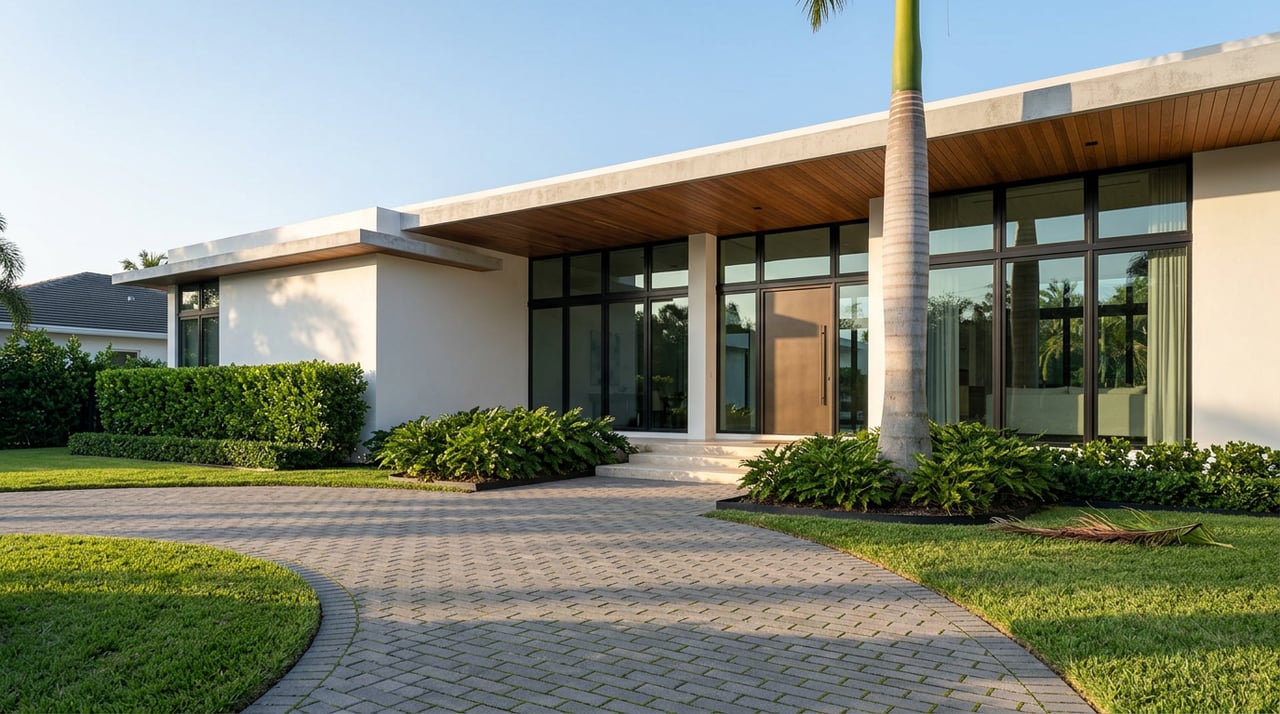
The Landings was platted in the early 1960s as a pure residential grid: single-family lots on the water, private docks, and nothing else. No parcel inside its streets was ever set aside for a restaurant, a coffee shop, or a corner store. Everything residents eat, shop for, or gather around sits just outside the lines, on Federal Highway to the west or Commercial Boulevard to the south. The neighborhood's identity runs almost entirely along its edges rather than through any center of its own.
A Neighborhood Built Without a Middle
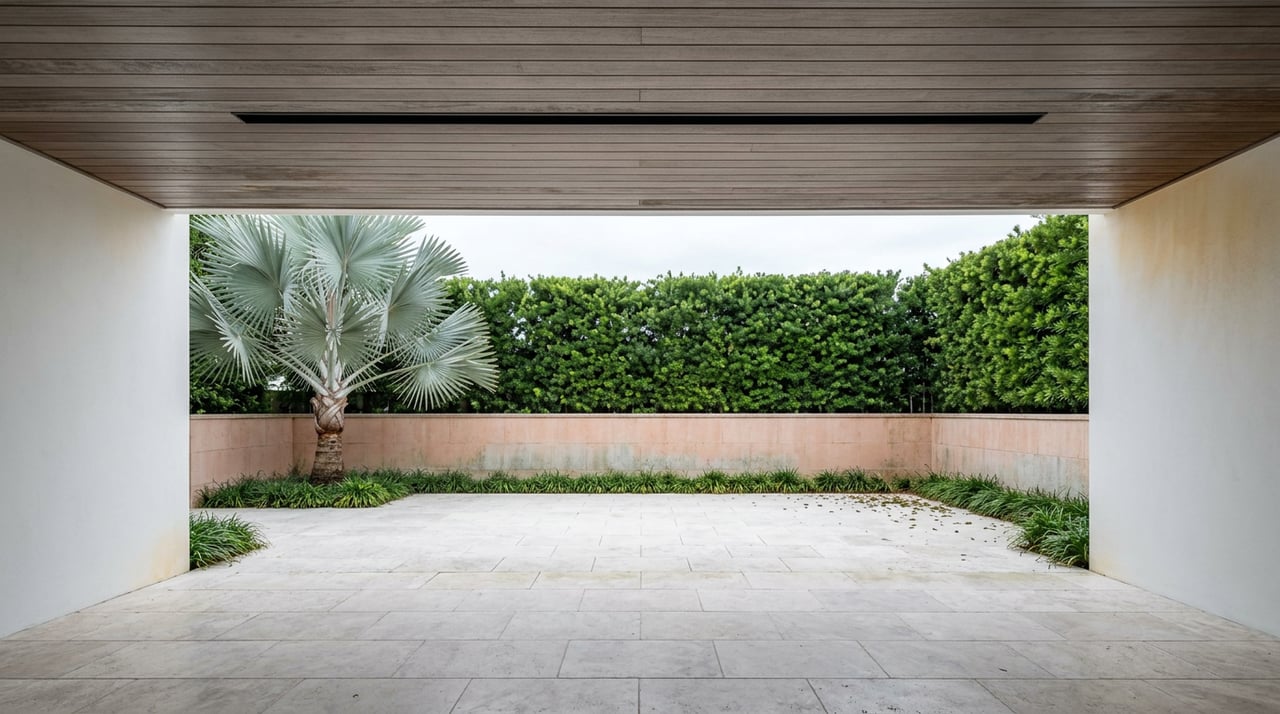
Most Fort Lauderdale neighborhoods have some kind of commercial spine woven into their footprint, even a modest one. The Landings doesn't. It sits east of US1/Federal Highway and north of Commercial Boulevard, and inside that boundary, every lot was built for a house and a dock, not a business. That's an unusual amount of restraint for a neighborhood this close to two major commercial corridors, and it means the interior of The Landings is entirely quiet: water, homes, and the streets between them.
The tradeoff is that residents have adopted the border streets as their own commercial district by habit. The restaurants they call theirs are the ones a short walk or a five-minute drive over the line, and the pattern of which ones get claimed says something about how tightly the neighborhood holds onto its edges.
The Restaurants Everyone Claims
Here's the roster residents actually use, and where each one really sits relative to the neighborhood line:
- Cafe Vico, 1125 N Federal Hwy, sits on the western boundary. It's known locally for its veal ossobuco and handmade pastas, with a candlelit, old-school Italian dining room that regularly books up on weekends.
- Greek Islands Taverna sits just west of the line on Federal, close enough that it functions as a Landings restaurant in every sense except the property tax bill. Its grilled octopus and lamb chops are the draw.
- Blue Moon Fish Co., at 4405 W Tradewinds Ave, sits dockside right at the neighborhood's edge, close enough to walk to by water for anyone with a boat and a few minutes to spare.
- Laspada's, the sub shop with a cult following for its oversized Northeast-style sandwiches, and El Guanaco Taqueria Y Antojitos at 3315 N Dixie Hwy, both live on the Dixie Highway side.
- Marlee's Cupcakery & Creamery, at 2749 E Commercial Blvd, anchors the Commercial Boulevard side with guava cream cheese cupcakes that show up at more than one Landings block party.
None of these addresses fall inside the neighborhood's own streets. All of them get referred to as though they do. That's not an accident of geography, it's a habit residents have built over decades of treating the boundary as the actual neighborhood.
Two Parks, Bookending the Grid
The same pattern holds for recreation. The Landings has no park of its own tucked into its interior. Instead, it's flanked north and south by two very different public spaces, and the contrast between them tells you something about how residents actually spend a weekend.
| Park | Location relative to The Landings | What it offers |
|---|---|---|
| Bayview Park | About a mile south on Bayview Drive, next to Cardinal Gibbons High School | Roughly 7 acres with tennis courts, a basketball court, a shaded playground, and a perimeter walking path |
| George English Park | 1101 Bayview Drive, at the Sunrise Boulevard corner marking the neighborhood's north end | About 15 acres with renovated boat ramps, the Jimmy Evert Tennis Center's lighted hard courts, newer pickleball courts, and a canoe and kayak launch |
George English Park's boat ramps went through a full renovation, with the city replacing the old docks with four new floating docks per ramp and rebuilding the connecting sidewalk. The rework cleared the ramps for vessels up to 10 feet 3 inches of vertical clearance, matched to the Sunrise Boulevard bridge that crosses the Middle River just north of the park.
The upshot is that a Landings resident's outdoor routine tends to run in a straight line up and down Bayview Drive itself: paddle or launch a boat at the north end, walk the dog or play a set of tennis at the south end, and never actually spend time in a park that sits inside the neighborhood, because there isn't one.
The Boundary That Splits Boating Itself
Bayview Drive doesn't just mark where The Landings starts and stops for restaurants and parks. It also splits the neighborhood's boating experience in two, right down the middle of a single HOA roll.
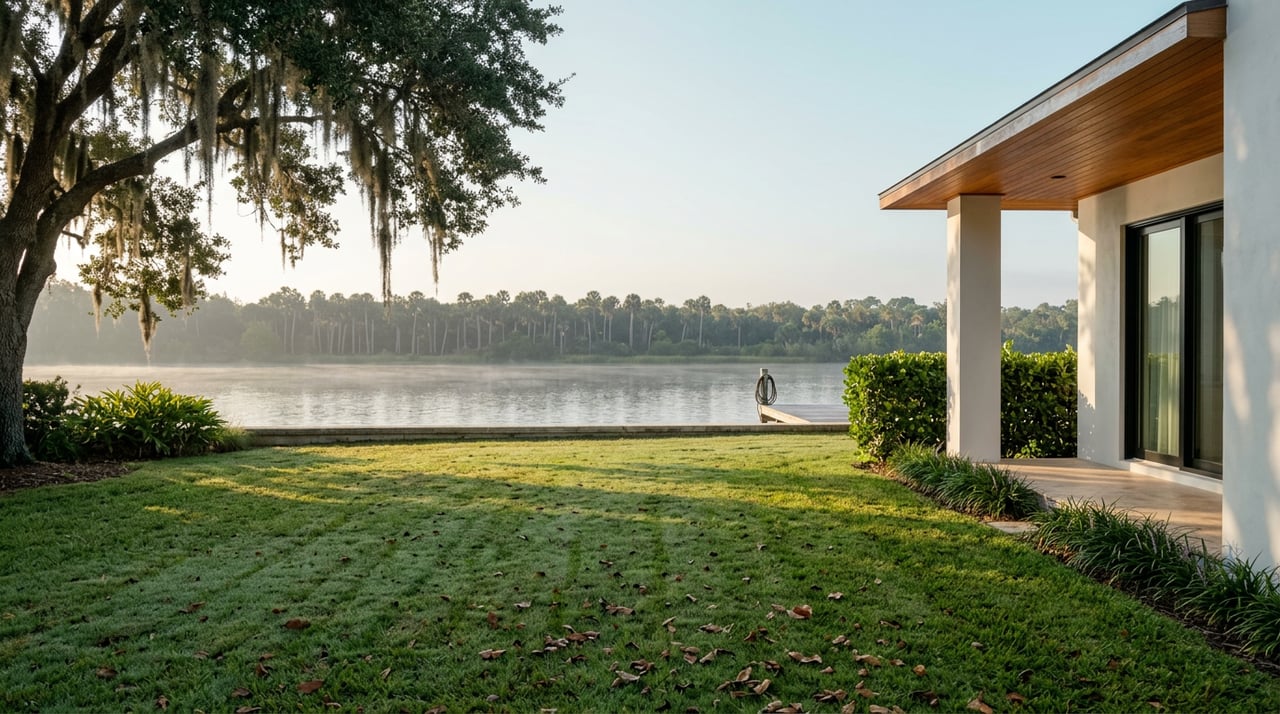
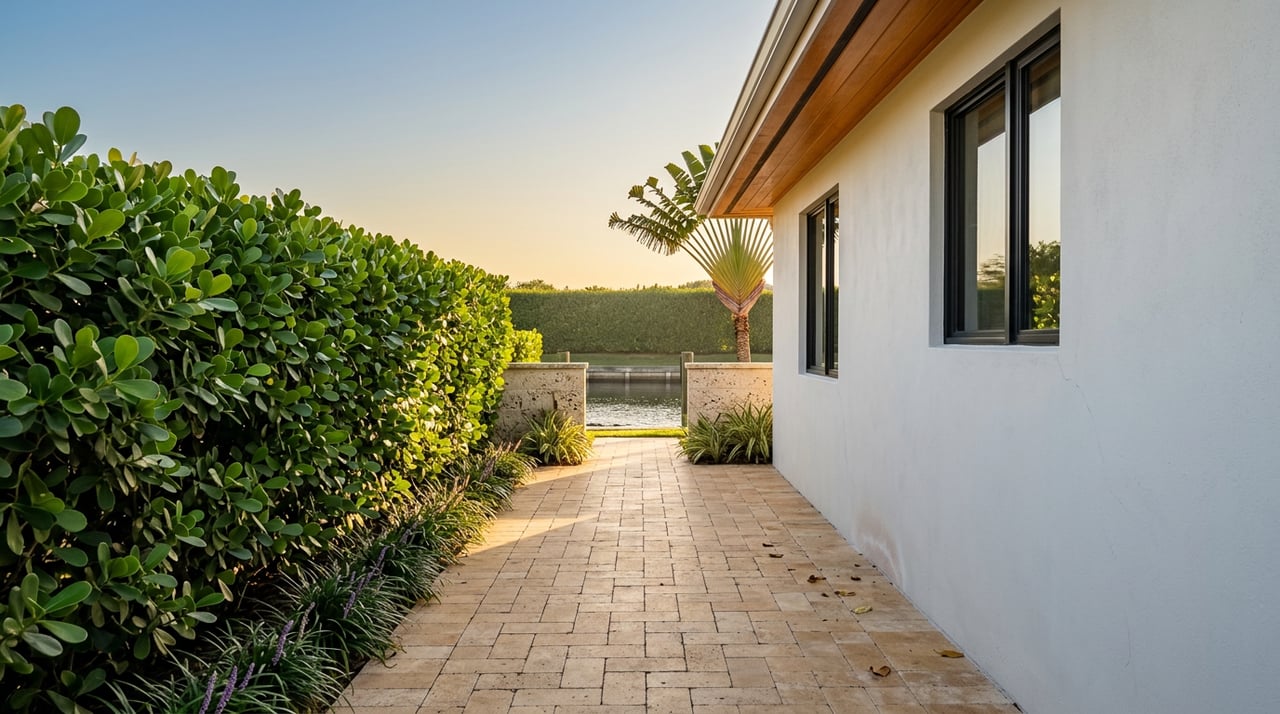
Homes east of Bayview Drive have direct, unobstructed access out to the Intracoastal Waterway and the ocean beyond it, with no fixed bridges in the way. Homes west of Bayview sit behind a fixed bridge that caps how tall a boat can be and still get out. Two houses can belong to the same association, pay the same dues, and receive the same newsletter, and still have fundamentally different relationships to the water depending on which side of one street they happen to sit on.
Governance Instead of a Storefront
With no commercial center to anchor community life, the actual gathering point in The Landings turns out to be civic rather than retail. The Landings Residential Association runs committees most homeowners associations don't bother with: Marine & Canals, Public Works, Beautification and Parks & Recreation, and Code and Compliance, which covers short-term rental issues specifically. It's the kind of committee structure you'd expect from a small municipality, not a subdivision board.
The association also produces a professionally printed, bimonthly magazine called The Landings & Bay Colony, delivered to every home in the neighborhood and in neighboring Bay Colony through USPS Every Door Direct Mail. It's recognized by the City of Fort Lauderdale as an official neighborhood organization and holds a seat with the Council of Fort Lauderdale Civic Associations, the city's umbrella group for neighborhood associations. The 2026 annual meeting, held in March, drew 45 residents and 20 elected officials and guests, a turnout that would be respectable for a much larger community.
This spring, the city also carried out concrete infrastructure improvements throughout Landings streets, the kind of below-the-surface public works project that residents notice for a week of traffic advisories and then forget entirely once the crews leave. It's a small detail, but it fits the larger pattern: the things that actually shape daily life here are streets, canals, bridges, and an HOA that behaves like a civic body, not a storefront strip.
The Line Is the Neighborhood
Put all of this together and a clearer picture forms. The Landings doesn't have a main street, a plaza, or even a corner deli. What it has instead are two parks bookending a residential grid, a fixed bridge that quietly divides its own boating population, a cluster of restaurants that residents claim as theirs despite sitting just outside the property lines, and a homeowners association that runs more like local government than a fee collector. The neighborhood's character isn't built around a center. It's built around its edges, and residents have simply decided that the edges count.
If you're weighing what life actually looks like along Bayview Drive, from a canal-front lot with no fixed bridge to a dry lot on the west side, or you want a clearer read on how The Landings compares to nearby waterfront pockets like Bay Colony or Sunrise Intracoastal, Heather Lefka can walk you through it. Schedule a private consultation to talk through what the map doesn't tell you.